



Overview
Wisdom teeth (third molars) are the last to develop, erupting between ages 17 and 25. When there is insufficient jaw space, they become impacted — unable to fully emerge — and may grow at an angle or remain under the gum. Impacted wisdom teeth are one of the most common reasons for dental extractions and are particularly prevalent in the GCC population due to jaw size patterns common in the region.
Symptoms
- Pain or aching at the back of the mouth, jaw, or ear
- Swollen, tender, or bleeding gums behind the last molar
- Difficulty opening the mouth fully (trismus)
- Bad taste or breath from infection around a partially erupted tooth
- Some impacted wisdom teeth cause no symptoms but still cause damage
Causes & Risk Factors
- Insufficient jaw space — very common in GCC populations
- Abnormal tooth angle: horizontal, mesial, distal, or vertical impaction
- Thick overlying gum tissue preventing eruption
- Family history of impacted wisdom teeth
Complications
- Pericoronitis: infection of the gum flap over a partially erupted tooth
- Decay: partially erupted wisdom teeth are very difficult to clean
- Damage to adjacent second molar: root resorption or decay
- Dentigerous cyst formation that can destroy significant bone
Diagnosis
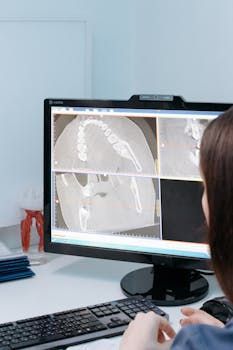
Panoramic X-ray (OPG) shows position, angulation, and relationship to surrounding structures. CBCT 3D scanning is used for complex cases near the inferior alveolar nerve.
Treatment
- Monitoring: asymptomatic fully bony-impacted wisdom teeth with no complications may be observed
- Surgical extraction: the definitive treatment for problematic wisdom teeth
- Antibiotics to treat acute pericoronitis before extraction
- Minor oral surgery under local anaesthetic; sedation available for anxious patients
Prevention
- Regular dental X-rays from the late teens to monitor development
- Early removal is generally easier with less risk than delayed extraction
- Good oral hygiene around erupting wisdom teeth reduces infection risk
Ready to take the next step? Book a consultation today
Get in touch
Contact us today
Every day, we face choices and decisions that significantly shape our interactions with one another and influence how our patients and broader communities perceive us. Our values instill confidence in our collective commitment to utilizing consistent principles as we navigate these decisions across our organization.
Contact Us
We will get back to you as soon as possible.
Please try again later.

We got it.
Thank you for contacting us.
We’ll get back to you as soon as possible.