



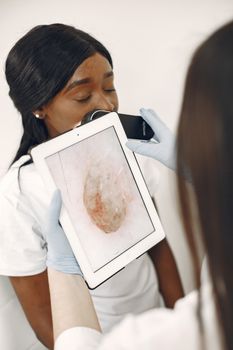
Overview
Cutaneous lupus is an autoimmune skin condition in which the immune system attacks skin cells, causing rashes, lesions, and scarring. It may occur alone or as part of systemic lupus erythematosus (SLE), which also affects internal organs. It disproportionately affects women of childbearing age and is more common in non-Caucasian populations, including people of Arab descent in the GCC.
Symptoms
- Butterfly (malar) rash: red rash across cheeks and nose worsened by sun — classic sign
- Discoid lupus: thick scaly disk-shaped patches causing permanent scarring and hair loss
- Photosensitivity: skin reactions to sunlight are a hallmark
- Mouth sores, lupus alopecia, Raynaud's phenomenon (fingers turning white or blue in cold)
Causes & Risk Factors
- Autoimmune: immune system produces antibodies that attack the body's own tissues
- Triggers: UV radiation (most important in Kuwait), infections, certain medications, stress, hormonal changes, smoking
Complications
- Permanent scarring and hair loss from discoid lupus
- Progression to systemic lupus (SLE) affecting kidneys, heart, lungs, and brain in some cases
- Increased cardiovascular and infection risk
Diagnosis
Clinical exam. ANA blood test and specific antibodies (anti-dsDNA, anti-Ro/La). Skin biopsy confirms cutaneous lupus. Urinalysis and kidney function for SLE screening.
Treatment
- Strict sun protection — the most important measure (SPF 50+, protective clothing, avoid midday sun in Kuwait)
- Hydroxychloroquine (Plaquenil): cornerstone medication — reduces flares and prevents progression
- Topical corticosteroids and calcineurin inhibitors for skin lesions
- Immunosuppressants (methotrexate, mycophenolate) for widespread disease
Prevention
- Strict daily SPF 50+ sun protection — prevents the most common flare trigger in Kuwait
- Avoid smoking; take hydroxychloroquine as prescribed without stopping
- Monitor kidney function regularly if SLE is diagnosed
Ready to take the next step? Book a consultation today
Get in touch
Contact us today
Every day, we face choices and decisions that significantly shape our interactions with one another and influence how our patients and broader communities perceive us. Our values instill confidence in our collective commitment to utilizing consistent principles as we navigate these decisions across our organization.
Contact Us
We will get back to you as soon as possible.
Please try again later.

We got it.
Thank you for contacting us.
We’ll get back to you as soon as possible.