



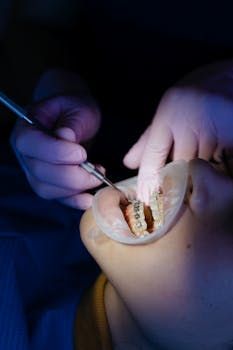
Overview
Malocclusion describes misalignment between upper and lower teeth when the jaw is closed. When teeth don't meet correctly, abnormal forces are placed on teeth, muscles, and joints — causing pain, wear, and increased dental problems over time. Malocclusion is extremely common and varies widely in severity from minor aesthetic concerns to significant functional problems.
Symptoms
- Overbite: upper front teeth cover too much of the lower front teeth (deep bite)
- Underbite: lower front teeth protrude in front of upper teeth
- Crossbite: upper teeth sit inside the lower teeth
- Open bite: upper and lower teeth don't meet when mouth is closed
- Overjet: upper front teeth protrude significantly forward
- Difficulty chewing, speech problems, jaw pain, and TMJ symptoms
Causes & Risk Factors
- Genetics: jaw and tooth sizes are largely inherited
- Childhood habits: prolonged thumb sucking, dummy use, or mouth breathing
- Early loss of baby teeth causing space loss and shifting
- Dental anomalies: missing teeth, extra teeth, impacted teeth
- Cleft lip and palate; jaw injuries
Complications
- Premature or abnormal tooth wear from incorrect bite forces
- TMJ disorder: jaw joint pain, clicking, and headaches
- Increased decay and gum disease from crowding and difficulty cleaning
- Sleep-disordered breathing if jaw position obstructs the airway
Diagnosis
Orthodontic assessment includes clinical exam, study models, photographs, OPG, and cephalometric X-ray. CBCT for severe skeletal cases. Severity classified using Angle's classification to distinguish dental from skeletal causes.
Treatment
- Orthodontic treatment: fixed braces or clear aligners for dental malocclusion
- Functional appliances in growing children to guide jaw development
- Orthognathic (jaw) surgery combined with orthodontics for severe skeletal malocclusion in adults
- Interceptive treatment in children: early removal of obstructive teeth or habit-breaking appliances
Prevention
- Discourage thumb sucking and dummy use after age 3
- Encourage nasal breathing; treat mouth breathing causes early
- Preserve baby teeth space; use space maintainers after early extraction
- First orthodontic assessment recommended at age 7
Ready to take the next step? Book a consultation today
Get in touch
Contact us today
Every day, we face choices and decisions that significantly shape our interactions with one another and influence how our patients and broader communities perceive us. Our values instill confidence in our collective commitment to utilizing consistent principles as we navigate these decisions across our organization.
Contact Us
We will get back to you as soon as possible.
Please try again later.

We got it.
Thank you for contacting us.
We’ll get back to you as soon as possible.