



Uterine Anomalies (Congenital Uterine Malformations)
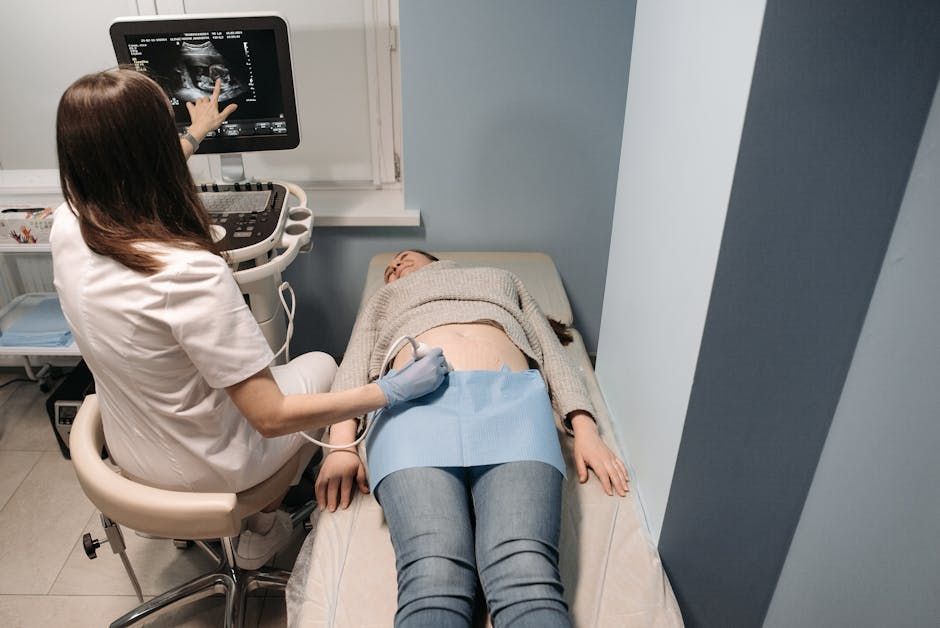
Overview
Uterine anomalies are structural abnormalities arising when the Müllerian ducts don't form or fuse correctly during foetal development. They affect ~5–7% of all women, rising to 25% in those with recurrent miscarriage.
Types
- Septate uterus — most common (35%); fibrous band divides the cavity; most associated with pregnancy loss
- Bicornuate uterus — two "horns"; linked to preterm birth
- Arcuate uterus — mild indentation; often a normal variant
- Unicornuate uterus — one side only; higher ectopic risk
- Didelphys uterus — two complete uteri and cervices
- Hypoplastic/absent uterus — e.g., MRKH syndrome
Symptoms
- Often no symptoms — discovered during fertility investigations
- Recurrent miscarriage, especially in second trimester
- Preterm labour or premature birth
- Abnormal foetal position (breech or transverse)
Diagnosis
- 3D transvaginal ultrasound — preferred initial tool
- MRI — most accurate for classification
- Hysteroscopy — direct visualisation and same-session treatment
- Renal ultrasound — to screen for associated kidney anomalies
Treatment
- Hysteroscopic septum resection — minimally invasive; significantly reduces miscarriage rates
- No treatment often needed — arcuate and bicornuate uteri may not require intervention
- Cervical cerclage — to reduce preterm birth risk in some cases
- Specialist obstetric monitoring throughout pregnancy
Experienced recurrent miscarriage or preterm birth? Book a consultation today
Get in touch
Contact us today
Every day, we face choices and decisions that significantly shape our interactions with one another and influence how our patients and broader communities perceive us. Our values instill confidence in our collective commitment to utilizing consistent principles as we navigate these decisions across our organization.
Contact Us
Thank you for contacting us.
We will get back to you as soon as possible.
We will get back to you as soon as possible.
Oops, there was an error sending your message.
Please try again later.
Please try again later.

We got it.
Thank you for contacting us.
We’ll get back to you as soon as possible.